


Can Volunteer-Run AV Teams Handle Modern Tech? (Yes, and Here's How)
- Tim Adams

- 2 days ago
- 5 min read
Author: Tim Adams
We’ve all seen it happen. It’s five minutes before the service starts, and the main display goes black. Or perhaps the livestream audio sounds like it’s being broadcast from the bottom of a swimming pool. The volunteer behind the soundboard: a high school student or a retired teacher who just wanted to help out: is staring at a glowing sea of buttons with a look of pure panic.
When faith communities look at upgrading their technology, the biggest fear isn't usually the price tag. It’s the "What now?" factor. Leaders worry that if they invest in high-end, modern AV systems, their volunteer teams won't be able to handle the complexity. There is a lingering myth that to run a modern production, you need a degree in electrical engineering or a full-time staff of professionals.
The good news? That myth is exactly that: a myth. At Timato Systems, we’ve seen volunteer-run teams handle cutting-edge tech with more grace and consistency than some professional crews. The secret isn’t finding "tech geniuses" to fill the seats; it’s about choosing the right systems and building a culture of confidence through training and supportive leadership.
Why Modern Tech Often Feels Scary
The hesitation to upgrade usually comes from past trauma. Maybe the last time the system was "updated," someone bought a bunch of consumer-grade gear from a big-box store, patched it together with duct tape and prayers, and left a 50-page manual that no one understands.
Modern professional technology, when designed correctly, is actually easier to use than the old-school analog gear. The shift from manual knobs to digital interfaces means we can create "presets." Imagine a world where a volunteer walks in, presses a few buttons and the lights dim, the projectors fire up, and the audio levels reset to a perfect baseline. That is what modern tech offers.
The challenge isn't the technology itself; it's the gap between the equipment and the person operating it. We bridge that gap through specialized design and an educational focus.
Designing for Humans, Not Robots
One of the core philosophies at Timato Systems is that durability and user-friendliness go hand-in-hand. When we talk about "durable systems" for churches, we aren't just talking about gear that won't break if you drop it. We’re talking about systems that are durable enough to withstand different skill levels.
A "volunteer-proof" system is one where the most important functions are front and center, while the "don't-touch-this-unless-you-want-to-break-it" settings are tucked away as much as possible. By simplifying the interface, we reduce the cognitive load on the volunteer. This allows them to focus on the most important part of their job: supporting the worship experience.

The Training Revolution: Moving Beyond "Push This Button"
The old way of training volunteers was "shadowing." A new person would sit next to a veteran for three weeks, try to memorize which slider does what, and then get thrown into the deep end. This rarely works because it focuses on mechanics rather than understanding.
To help volunteer teams handle modern tech, we recommend a three-pronged training approach:
1. Unified Technical Protocols
Consistency is the enemy of chaos. Every volunteer should follow the exact same startup and shutdown procedures. We highly recommend creating "One-Pagers": laminated sheets sitting at every station that walk a user through the basics. If you want to see how better tech impacts the overall engagement of your community, check out our post on the real ROI of upgrading AV.
2. Video-Based "How-To" Libraries
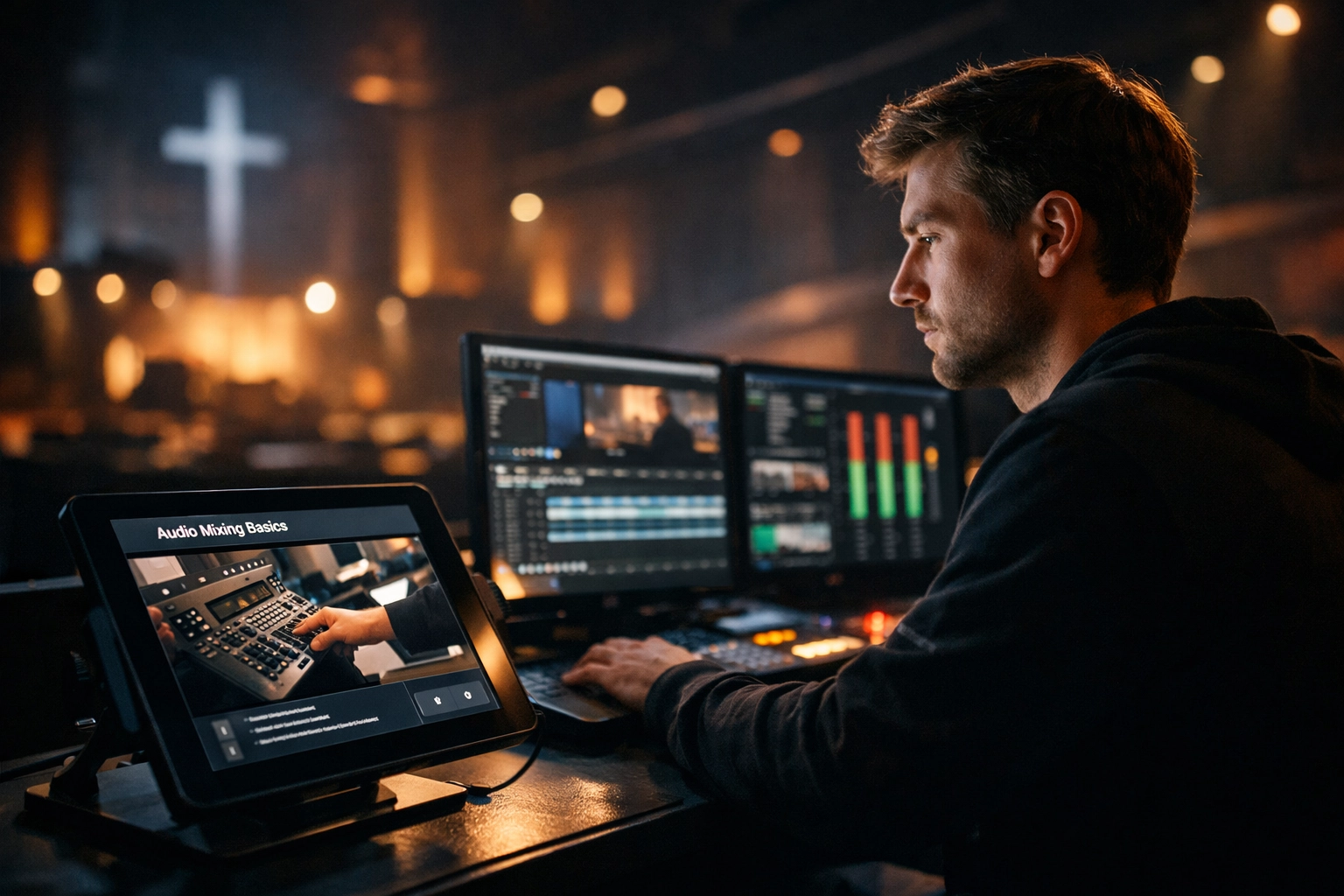
Since most volunteers work on a rotating schedule, they might go three or four weeks without touching the gear. They’re going to forget things. Having a library of 2-minute videos: recorded specifically on your gear: is a game changer. "How to turn on the wireless mics," "How to switch the camera feed," etc. This empowers them to troubleshoot without needing to call the "tech person" on their day off.
3. Competency Over Time
Don't try to teach a new volunteer how to mix a full band, manage a livestream, and run a lighting console on day one. Start them on one specific task, like camera operation or lyric slides. Once they feel like a pro in that area, move them to the next. Cross-training is a HUGE benefit to your team to avoid people getting "pigeon-holed" into one area and ready to jump in and help when issues arise.
Matching Passion to Position
Not every volunteer is cut out for the soundboard, and that’s okay. Research shows that organizations are most successful when they match volunteers with their actual interests and strengths.
Some people love the fast-paced, "video game" feel of switching cameras. Others prefer the quiet, behind-the-scenes task of preparing graphics. Use tools like a simple personality assessment to see where people naturally fit. When a volunteer is doing something they actually enjoy, they are much more likely to put in the effort to learn the modern tech associated with that role.
If you're a leader trying to navigate these choices, our pastor’s guide to sound equipment offers some great perspective on making equipment choices that benefit the whole team.
Specialized Systems Make Life Easier
There is a massive difference between a generic AV setup and a system built specifically for the needs of churches. At Timato Systems, we focus on creating specialized solutions that prioritize clarity and reliability.
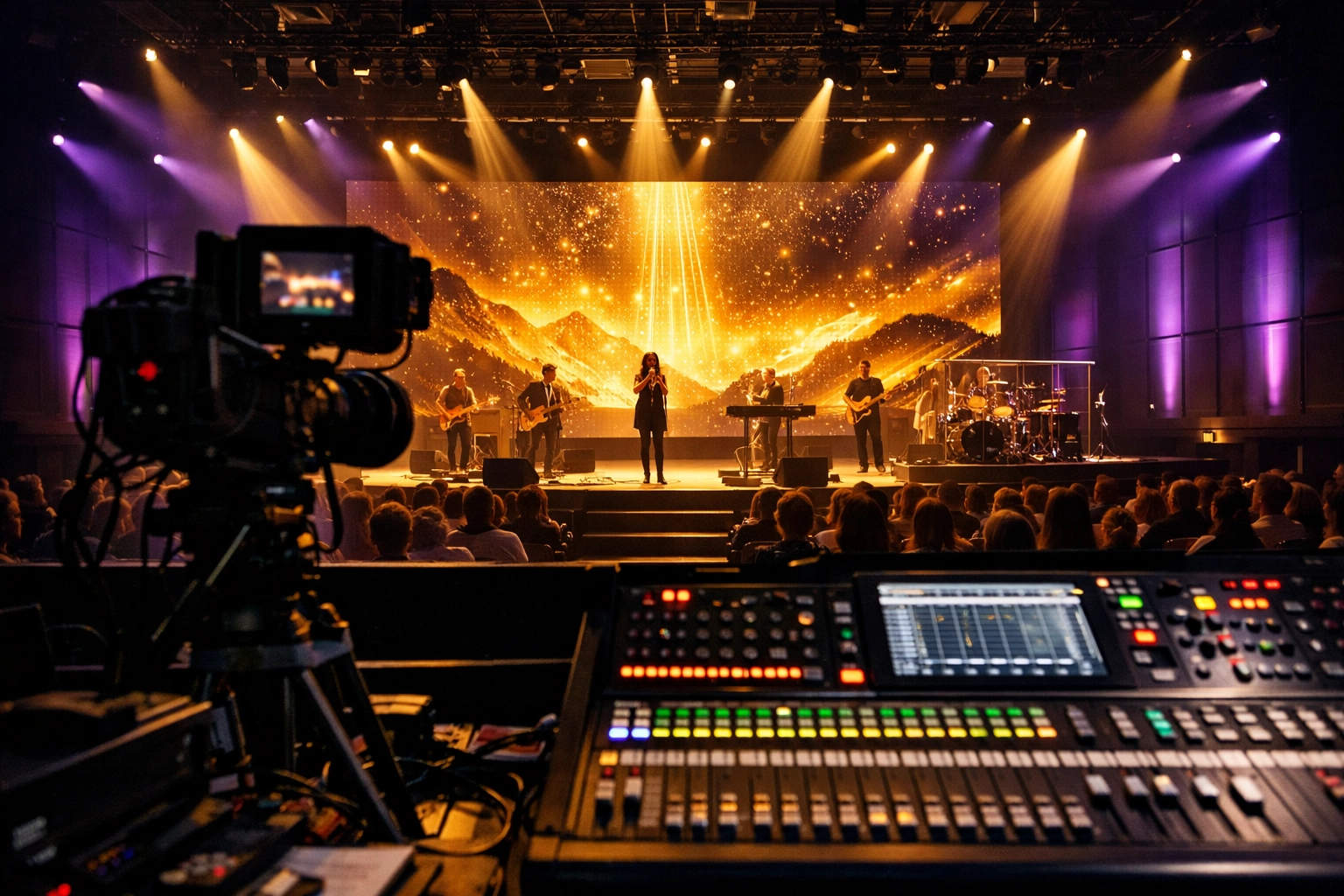
For example, a modern digital audio console might look intimidating, but it allows us to save "scenes." If your mid-week youth group uses the same three mics every week, we can save that setting. The volunteer just has to recall the "Youth Group" scene, and they are 90% of the way there. This level of automation is what allows a non-professional to produce professional results.
When you invest in equipment that is designed for your specific environment, you are essentially buying back time and peace of mind for your volunteers. It's not just about the gear; it's about the mission. You can read more about this in our article on price vs value.
Handling the "What If" Scenarios
Modern tech is reliable, but it isn't magic. Things happen. One of the best ways to empower a volunteer team is to train them for the "What Ifs."
What if the internet goes down? (Do they know how to continue the local recording?)
What if a mic battery dies? (Do they know where the spares are and how to swap them quickly?)
What if the screen freezes? (Do they know the "panic button" or the bypass switch?)
Giving volunteers a "Troubleshooting Checklist" builds a level of confidence that "just pushing buttons" never will. It moves them from being operators to being problem solvers.
The Long-Term Impact
When a volunteer feels successful, they stay. When they feel overwhelmed and frustrated because the tech is too "fussy" or poorly designed, they quit. By investing in modern, user-friendly tech and pairing it with a solid training foundation, you aren’t just improving your Sunday morning production: you’re investing in your people.
Volunteer-run teams can absolutely handle modern tech. In fact, they often thrive with it because it removes the manual guesswork and replaces it with streamlined, reliable workflows.
If you are wondering if your current setup is holding your team back, or if you're ready to look into a system that actually makes sense for your faith community, check out our blog for more tips. Whether it's fixing livestreaming mistakes or understanding room acoustics, we’re here to help you lead with confidence.
Don't let the fear of "too much tech" keep you in the dark ages. With the right partner and the right design, your volunteers will be the ones asking, "Why didn't we do this sooner?"
Comments