


Must-Have Features for Modern Sanctuary Sound Systems
- Tim Adams

- Feb 5
- 4 min read
Updated: Mar 30
Your sanctuary's sound system is more than just speakers and microphones: it's the bridge between your message and your congregation. Whether you're delivering a heartfelt sermon or leading contemporary worship, the right audio setup can make or break the experience. Let's dive into the essential features that modern sanctuary sound systems need to truly serve your ministry.
Strategic Speaker Placement and Configuration
The foundation of any great sanctuary sound system starts with main speakers that cover every seat in the house. You want consistent, clear audio from the front row to the back pews, and that means thoughtful placement is everything.
Our personal favorite speaker system solution centers around the FlatPanel Audio DML500. A new technology that promises to upset the industry and turns just about everything you know about how sound spreads through a space on its head. Diffused, non-correlated sound waves produce clean, coherent full-range sound with inherent feedback rejection and a sleek design aesthetic that fits in anywhere.
But don't forget about the low end. Subwoofers are essential for contemporary worship, especially when you've got a full band leading music. The trick is strategic placement: many modern installations hide subwoofers behind main speakers or in concealed locations to maintain your sanctuary's aesthetic while delivering that rich 40-120 Hz range that makes worship music come alive.
Multi-Zone Audio Distribution
Your sanctuary isn't just the main worship space: you've got foyers, cry rooms, hallways, and other areas that need audio too. Modern systems require flexible audio distribution that can send different audio feeds to different zones with independent volume control.
This is often more complex than people realize. While your main sanctuary might need a simple stereo mix, your foyer might need background music during pre-service, and your cry room needs the full sermon audio. A good system handles all of this seamlessly through intelligent routing capabilities.
Monitoring Solutions That Actually Work
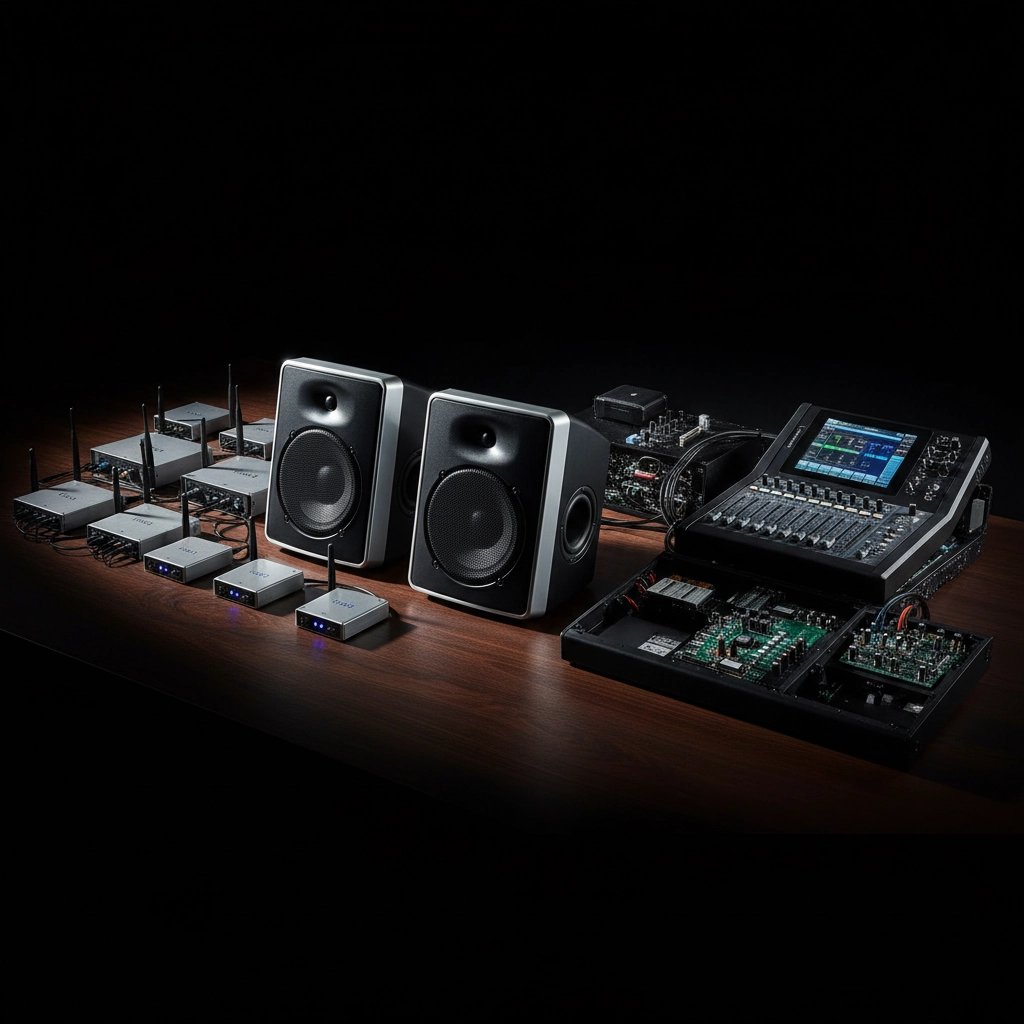
If you've got people on stage: pastors, worship leaders, musicians: they need to hear themselves clearly. This is where stage monitors and in-ear systems become absolutely crucial.
Stage monitors provide real-time audio feedback to performers, but in-ear monitors are increasingly popular because they offer personalized mixes directly to each person without adding to stage clutter or creating feedback issues. The ability to give your worship leader a different mix than your drummer can transform your team's performance.
Advanced Audio Processing Features
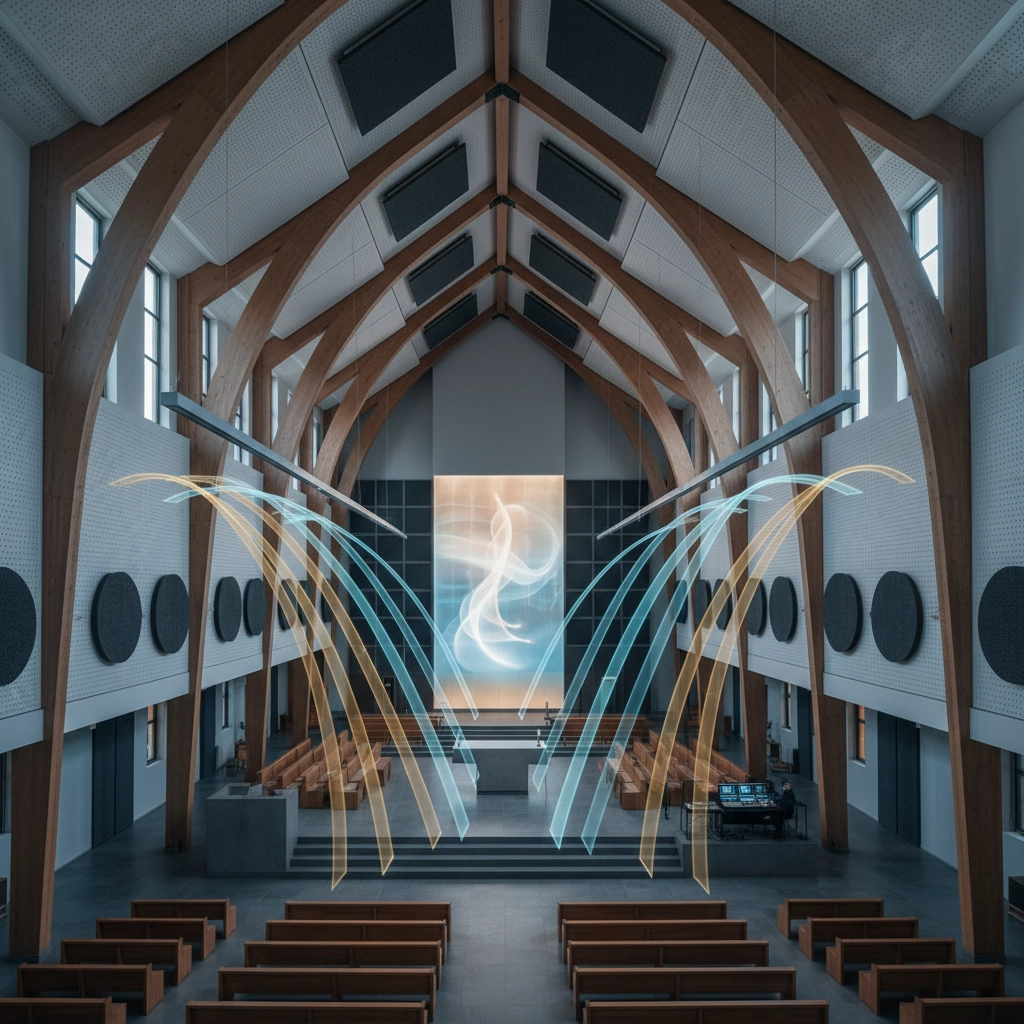
Modern sanctuary systems go beyond basic amplification. Directional sound capabilities allow you to focus audio like a spotlight on your seating areas while avoiding reflective surfaces like walls, windows, and ceilings. This prevents those annoying echoes that make speech hard to understand.
Think of it as acoustic precision: you're painting with sound, directing it exactly where it needs to go and away from where it doesn't. This technology is particularly valuable in challenging acoustic environments with hard surfaces and high ceilings.
Technical Specs That Matter
When evaluating speakers, don't just look at wattage. Maximum SPL (Sound Pressure Level) gives you a better picture of actual volume capability. A speaker's sensitivity rating is equally important: it tells you how efficiently it converts power into sound.
Here's a practical example: a 500-watt speaker with 98dB sensitivity can match the volume of a 1,000-watt speaker with 95dB sensitivity. Understanding these specs helps you make smarter purchasing decisions.
Coverage patterns are another crucial consideration. A powerful speaker with narrow coverage might not reach as many people as a less powerful one with broader coverage. Match your speaker specs to your space, not just your budget.
Modern Connectivity and Integration
Today's sanctuary systems need wireless and Bluetooth capabilities for seamless integration with mobile devices and wireless microphone systems. This isn't just about convenience: it's about flexibility for different service styles and spontaneous ministry moments.
Modern connectivity also means easy integration with your livestream setup, recording systems, and even emergency notification systems. Your sound system should play well with all your other technology.
Intuitive System Management
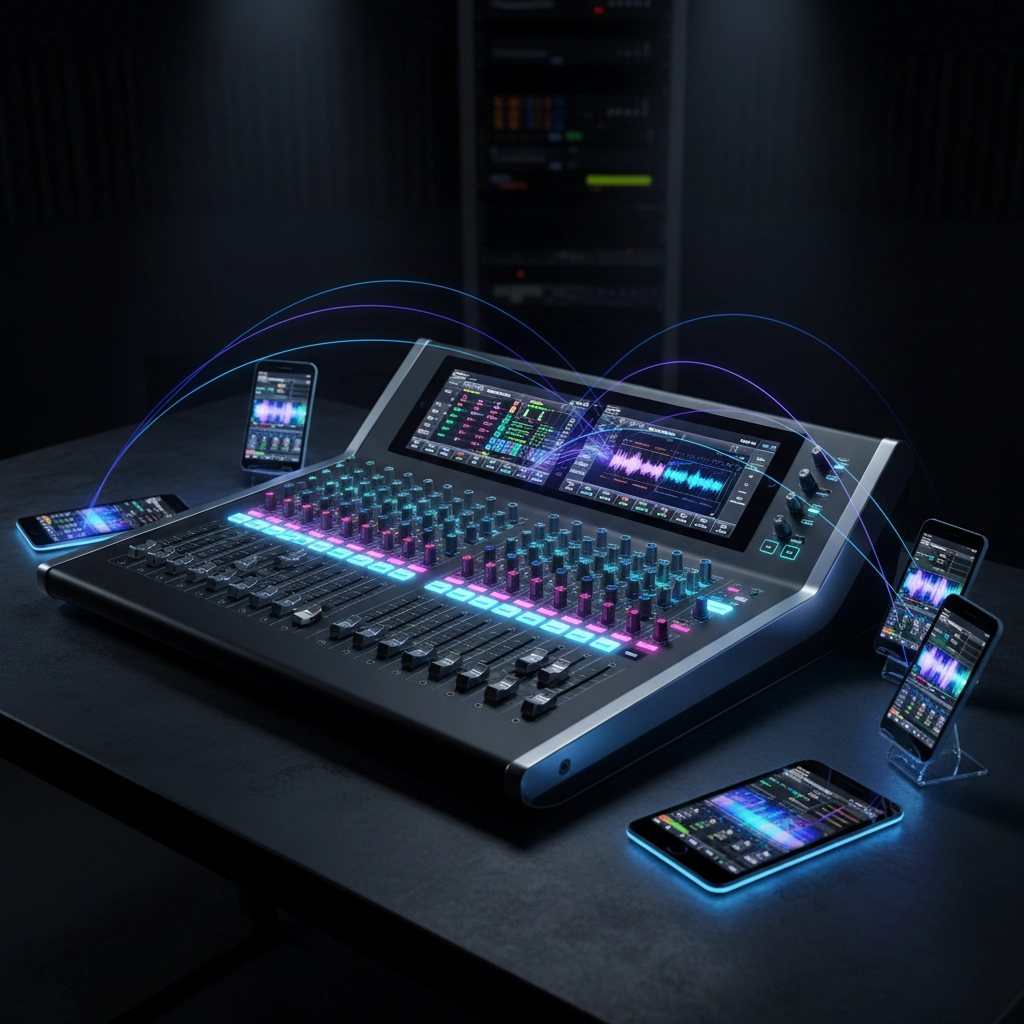
Your sound system is only as good as the people operating it, and that often means volunteers with varying levels of technical expertise. Touch control interfaces and automated system management make complex audio tasks simple.
Look for systems that offer preset configurations for different service types: contemporary worship, traditional services, special events, or conferences. The ability to recall proven settings with a single button press eliminates guesswork and reduces the chance of audio disasters.
Acoustic Adaptability
Every sanctuary presents unique acoustic challenges. High ceilings create resonance, hard surfaces cause reflections, and architectural features can create dead spots or echo chambers. Modern sound systems use simulation software during installation to determine optimal speaker positions and angles.
This isn't just about initial setup: good systems adapt to changes. If you're renovating or reconfiguring your space, your sound system should be flexible enough to accommodate those changes without starting from scratch.
Future-Proofing Your Investment
A quality sanctuary sound system is a significant investment, so you want features that will serve you for years to come. This means scalable architecture that can grow with your ministry and upgradeable components that won't become obsolete.
Consider systems that support digital networking protocols, allowing you to expand or reconfigure your setup as needs change. The ability to add zones, integrate new technology, or enhance existing capabilities without replacing everything is invaluable.
Making the Right Choice for Your Ministry
The best sanctuary sound system is one that serves your specific ministry needs without overwhelming your team or budget. Start by honestly assessing your current challenges: is it speech intelligibility, music quality, or coverage consistency?
Consider your volunteer capabilities too. The most sophisticated system in the world won't help if your team can't operate it confidently. Sometimes the best solution is the one that's reliable and simple rather than feature-packed and complex.
Remember, your sound system should enhance worship, not distract from it. When people leave your service talking about the message rather than the audio problems, you know you've got it right.
The investment in a quality sound system pays dividends in every service, every event, and every moment when your message connects clearly with your congregation. Take the time to choose wisely: your ministry depends on it.
Ready to explore how the right sound system can transform your sanctuary experience? The right features make all the difference between audio that works and audio that truly serves your ministry mission.
Comments