


Do You Really Need an LED Video Wall? The Truth for Churches Under 500
- Tim Adams
- Feb 19
- 5 min read
Updated: Mar 30
You've seen them in megachurches. The stunning LED video walls that make worship lyrics pop, create immersive environments, and handle broadcast-quality video without breaking a sweat. And maybe you've wondered: Should we get one too?
For churches under 500 members, that question comes with a hefty dose of reality. You're not working with a megachurch budget. Your sanctuary isn't stadium-sized. And your volunteer team probably isn't staffed with broadcast engineers.
So let's cut through the marketing hype and talk honestly about whether an LED video wall makes sense for your congregation: or if you're better off sticking with what you've got.
The Real Cost Picture (It's Not What You Think)
Here's the good news: LED video walls aren't the luxury item they used to be. The technology has matured, and prices have dropped significantly over the past five years.
Current market data shows that upfront costs for LED walls run about 15-20% higher than comparable projection systems. For a smaller church, that might translate to an additional $3,000-$8,000 on your initial investment, depending on size and resolution.
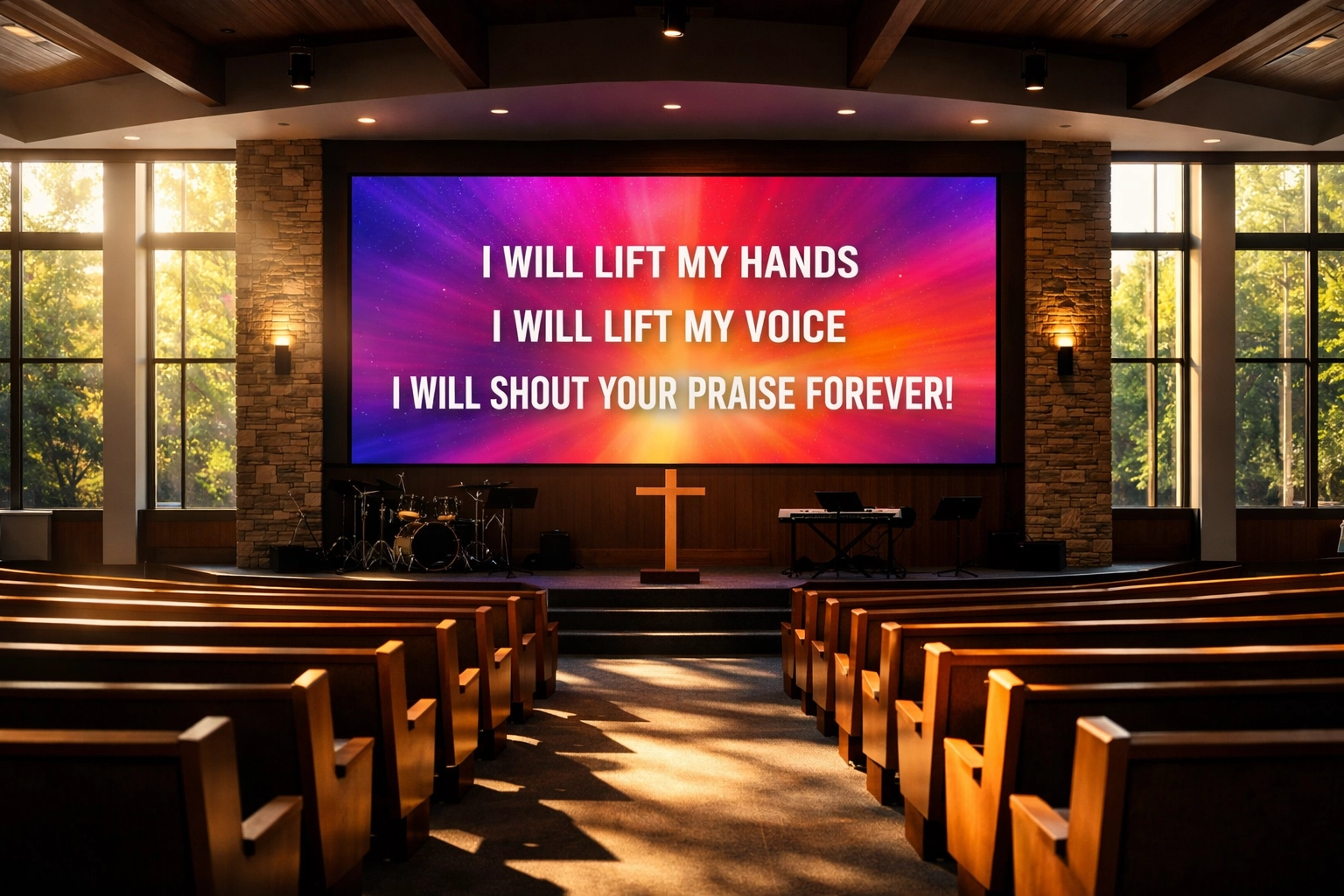
More significantly, LED walls have a lifespan 2-3 times longer than projectors. While you might replace projector bulbs every few years (at $300-500 per bulb), LED panels can run 10+ years with minimal maintenance. When you factor in the total cost of ownership over a decade, the numbers start looking very different.
Still, let's be clear: even with these advantages, you're looking at a significant investment. For most churches under 500, that means this decision needs to go beyond just the tech specs.
When LED Walls Actually Make Sense for Smaller Churches
Not every church under 500 members needs an LED wall. But some definitely do. Here are the situations where this technology becomes more than just a nice-to-have:
Your Sanctuary Has Serious Lighting Issues
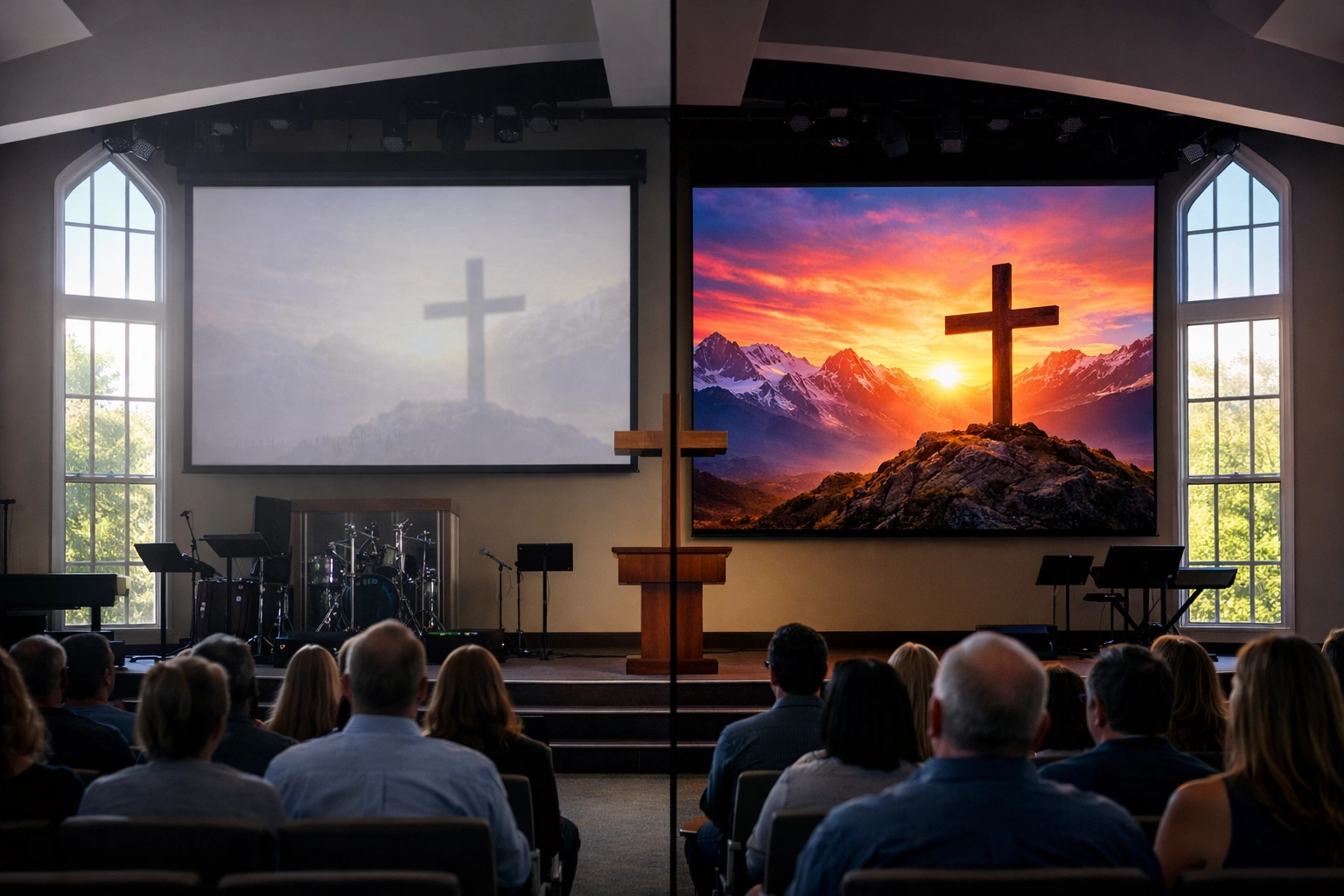
If your worship space has lots of windows, skylights, or bright ambient lighting, projectors are fighting a losing battle. They wash out in daylight, making lyrics unreadable and videos unwatchable. LED walls maintain visibility in virtually any lighting condition. If you're currently dealing with complaints about people not being able to read the screen during morning services, this alone might justify the investment.
You're Serious About Online Ministry
LED walls look dramatically better on camera than projected images. If you're livestreaming services or producing video content, the difference is night and day. The color accuracy, contrast, and overall image quality translate directly to better production value for your online audience.
Your Worship Style is Contemporary or High-Energy
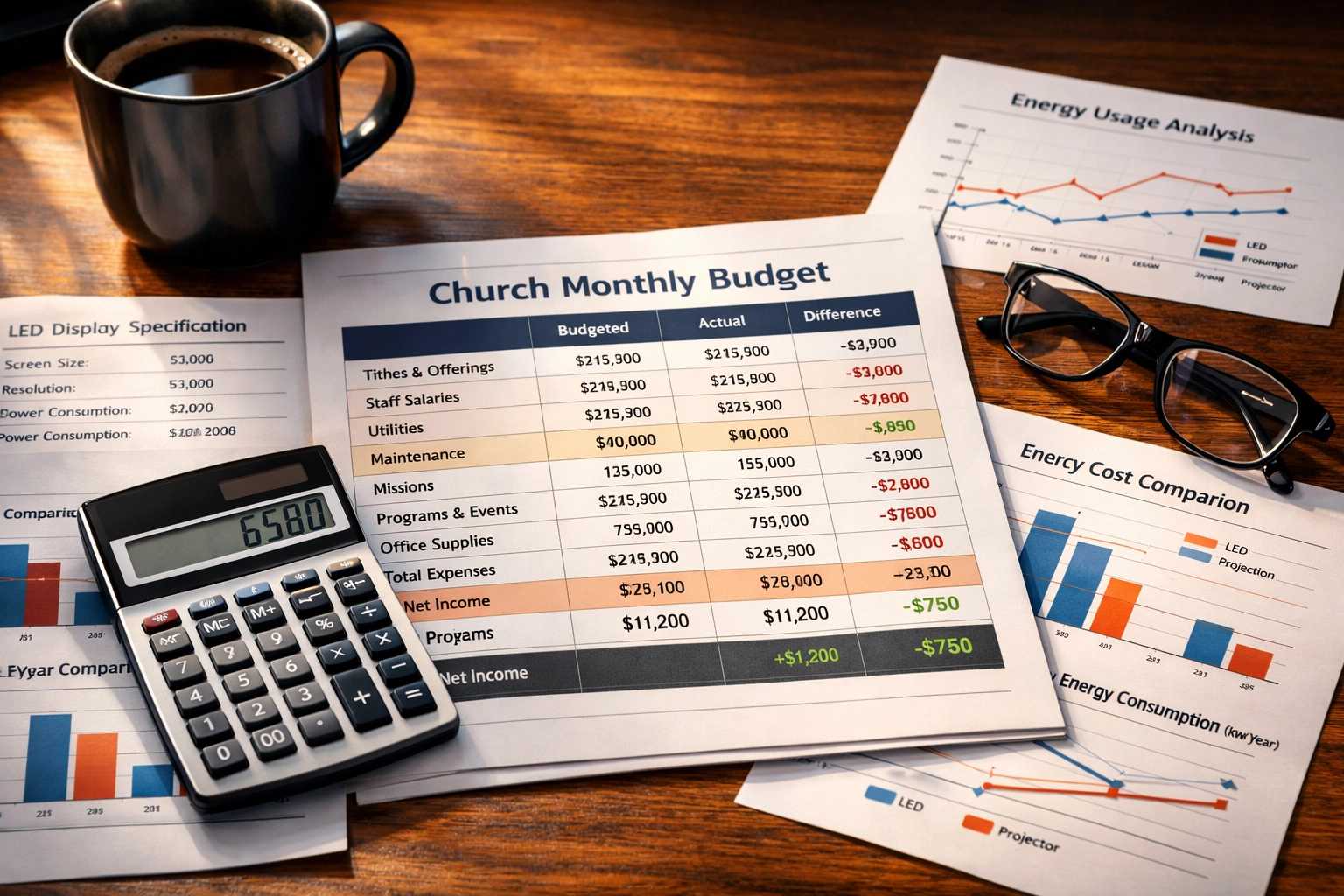
Let's be honest: LED walls create atmosphere. They can display moving backgrounds, create stage depth, and shift with the mood of worship in ways projectors simply can't match. If your worship style leans contemporary with full band, lighting design, and intentional stage aesthetics, LED walls complete that picture in a way that projectors never will.
You're Planning a Building Project or Major Renovation
If you're already investing in construction or significant upgrades, adding LED walls to that project makes financial sense. The installation costs are already being absorbed into a larger budget, and you can design the space around the technology from the start rather than retrofitting later.
When You Should Skip the LED Wall
Now for the uncomfortable truth: plenty of smaller churches are better off without LED walls. Here's when to pump the brakes:
Your Current System Works Fine
If your congregation isn't complaining about visibility, your projector isn't fighting ambient light, and your current setup meets your actual ministry needs, upgrading to LED might be solving a problem you don't have. That money could potentially have greater kingdom impact elsewhere.
You Don't Have Margin in Your Budget
LED walls shouldn't push your church into financial strain. If purchasing this technology means cutting ministry programming, delaying necessary building maintenance, or putting undue pressure on giving, it's not the right time. Technology serves ministry: never the other way around.
Your Tech Team is Already Overwhelmed
LED walls require different technical knowledge than projectors. Content needs to be formatted differently. Color management is more critical. Troubleshooting is more complex. If your volunteer team is already stretched thin managing current AV systems, adding LED might create more problems than it solves.
You're in a Traditional Space with Historic Architecture
Some sanctuaries just aren't designed for modern video walls. If you're in a historic building, traditional architecture, or a space where the technology would feel jarring rather than complementary, projection might be the more appropriate choice.
The Middle Ground: Alternatives Worth Considering
You're not locked into an all-or-nothing decision. Here are some middle-ground options that might fit your situation better:
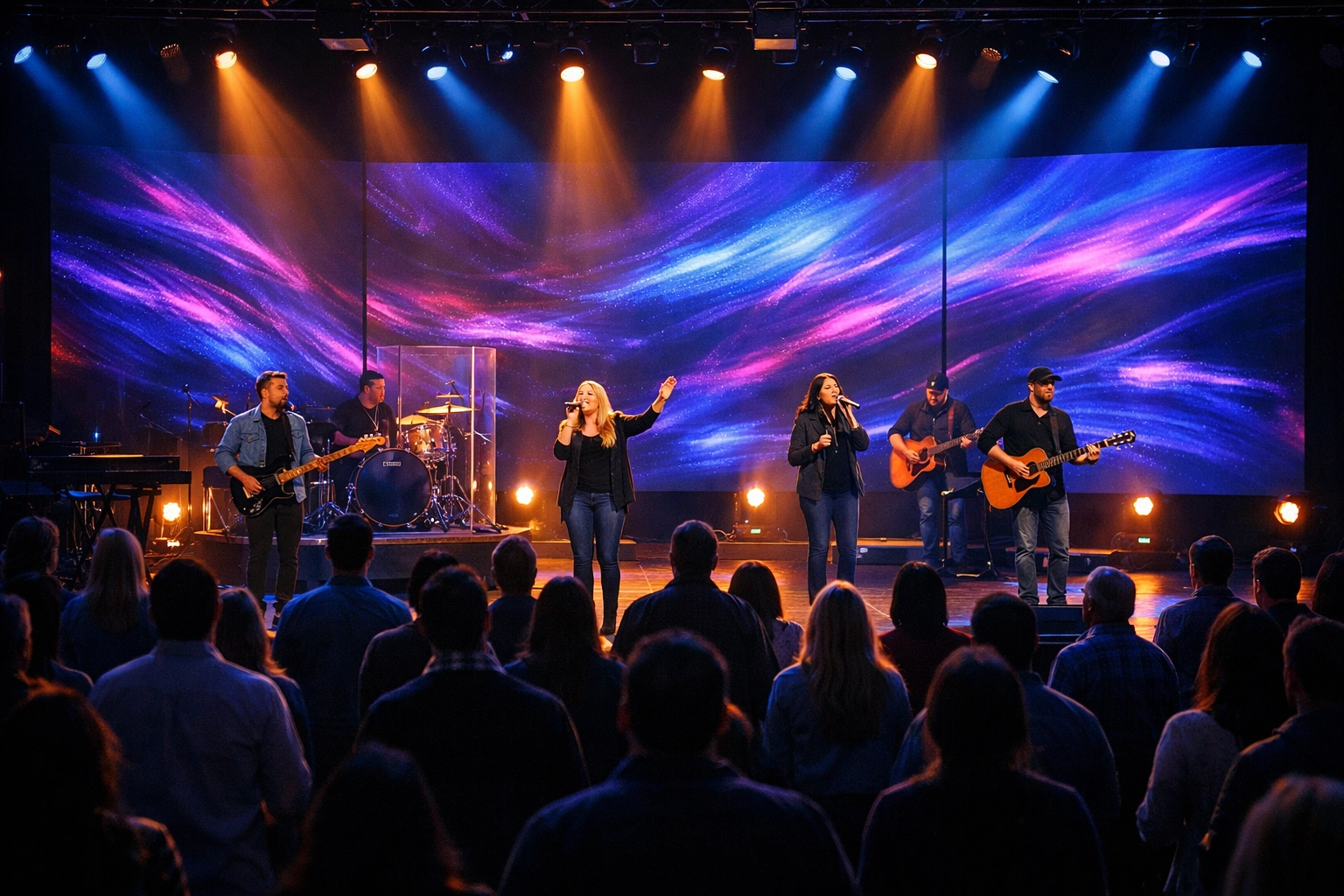
Hybrid Approaches: Some churches use smaller LED panels for stage backgrounds while keeping projectors for lyrics and announcements. This gives you the visual impact where it matters most while controlling costs.
High-Lumen Projectors: Modern laser projectors offer dramatically better brightness and contrast than older models. A quality 10,000+ lumen projector can handle most lighting situations at a slightly lower cost than LED walls.
Portable LED Solutions: If you're a portable church or multi-use space, smaller modular LED panels can create impact without permanent installation costs. Just factor in the potentially higher cost of more durable LED wall panels you will definitely want!
Making the Right Decision for Your Church
Here's a practical framework for evaluating whether LED walls make sense for your congregation:
Step 1: Define Your Actual Needs
What problems are you trying to solve? Is it visibility? Production quality? Aesthetic enhancement? Be specific. Vague goals lead to expensive mistakes.
Step 2: Calculate Total Cost of Ownership
Don't just look at purchase price. Factor in installation, ongoing maintenance, energy costs, and training. Compare that total against your current system over a 10-year timeline.
Step 3: Get Multiple Quotes
Technology pricing varies wildly. Talk to specialized AV providers who understand worship environments. A good consultant will tell you if LED isn't the right choice for your situation.
Step 4: Consider Phased Implementation
Can you start with a smaller installation and expand later? Many churches begin with a center screen and add side panels as budget allows.
Step 5: Measure Against Ministry Impact
At the end of the day, ask: will this technology enhance worship, improve communication, or expand our ministry reach in ways that justify the investment? If you can't articulate clear ministry outcomes, it's probably not time yet.
The Bottom Line
LED video walls can absolutely make sense for churches under 500 members: but only in the right context. The technology is more affordable and practical than ever, but it's still a significant investment that requires honest evaluation of your needs, budget, and ministry goals.
If your sanctuary battles lighting issues, you're committed to online ministry, or you're already planning major upgrades, LED walls might be exactly what you need. But if your current system is working well and the money could serve your mission better elsewhere, there's no shame in sticking with projection.
The best technology decision isn't about having the latest equipment: it's about choosing tools that serve your specific ministry context effectively. Sometimes that means LED walls. Sometimes it means investing elsewhere. The key is making that call based on your reality, not someone else's sanctuary.
Your church doesn't need to look like a megachurch to be effective. But if LED technology genuinely serves your ministry better, the investment can absolutely be worth it ( even for congregations under 500.)