


Can Old Sanctuary Architecture Work With Modern AV? (Yes, Here's the Proven Framework)
- Tim Adams
- Feb 26
- 5 min read
Updated: Mar 30
Walk into most historic sanctuaries and you'll see the same tension: beautiful traditional architecture that inspires reverence, paired with the very real need for modern video streaming, clear sound for hearing-impaired members, and contemporary lighting that actually works for cameras.
The good news? Old sanctuary architecture and modern AV can absolutely work together. The bad news? You can't just slap equipment on walls and hope for the best.
Here's the framework that's proven to work across dozens of traditional worship spaces, without turning your sanctuary into a Best Buy showroom.
Why This Actually Matters
Before we dive into the how, let's acknowledge the stakes. Your sanctuary architecture tells a story. Those stained glass windows, hand-carved woodwork, vaulted ceilings, and traditional fixtures represent decades (sometimes centuries) of heritage and meaning.
But here's the reality: if your congregation can't see the lyrics, hear the message clearly, or share services with members who can't attend in person, the most beautiful architecture in the world doesn't fulfill its purpose.
The framework below solves both problems simultaneously.
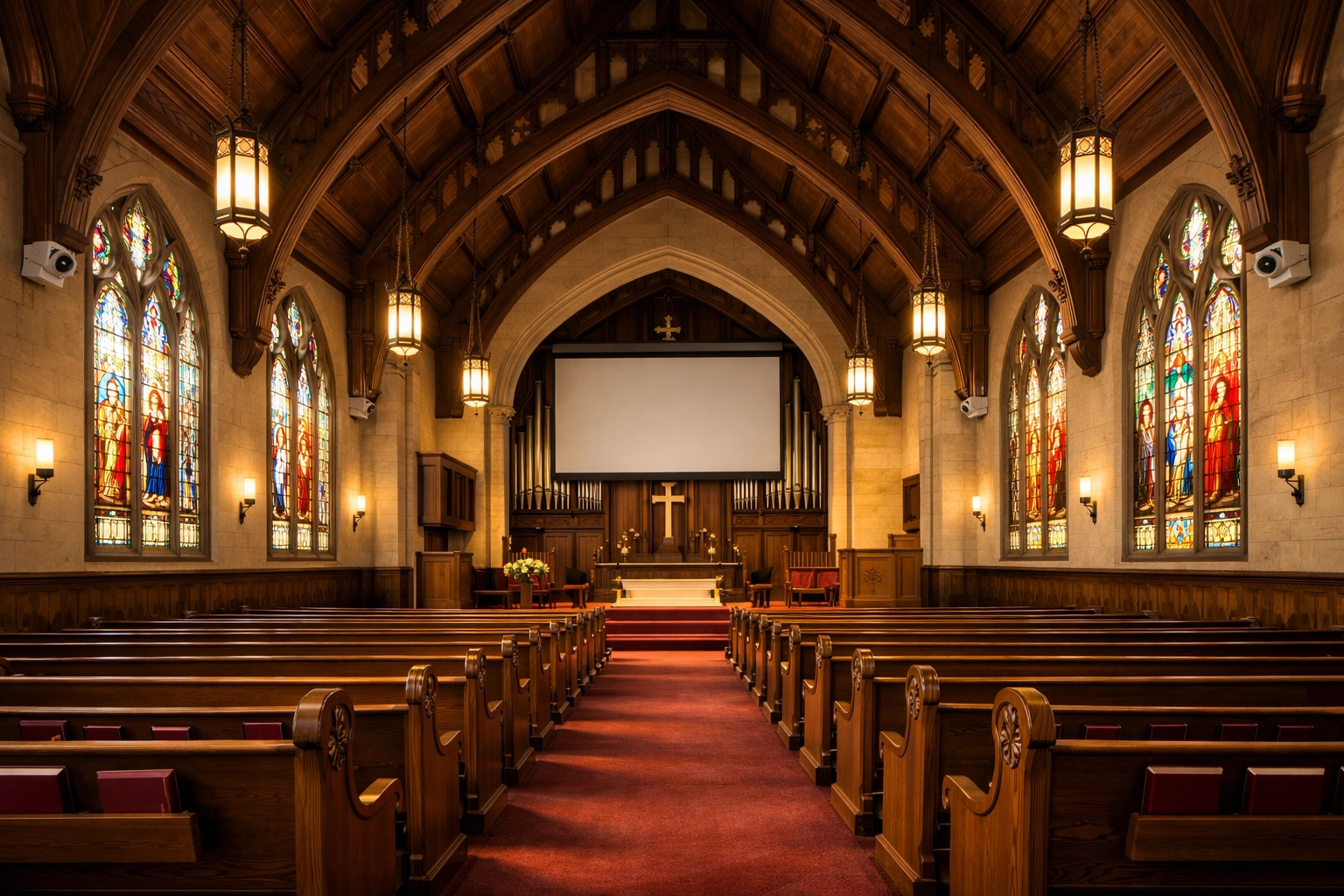
The Core Framework: Four Non-Negotiable Principles
1. Preservation First, Technology Second
This sounds obvious, but most AV installations get it backward. They start with the equipment and try to fit it into the space. That's how you end up with giant black speaker boxes mounted on historic columns or LED walls that look like they belong in a sports arena.
Instead, begin by identifying which architectural elements are sacred (pun intended). Is it the sightlines to the altar? The natural light from windows? The ceiling details? The wall finishes?
Make these your design constraints, not afterthoughts. At one Lutheran facility in Wisconsin, the team specifically focused on systems that would enhance worship while remaining visually unobtrusive. They preserved traditional features through careful equipment specification and minimal visual footprint.
The result? Most members didn't even realize new technology had been installed until they experienced the improved quality.
2. Adapt Equipment to Your Specific Environment
Modern AV doesn't mean cookie-cutter solutions. Your space has unique challenges, and unique opportunities.
For Projection Systems:
If your sanctuary has abundant natural light (hello, stained glass windows), you need high-lumen projectors with motorized screens that disappear when not in use. A Presbyterian facility in Florida tackled this exact challenge with 9,000-lumen rear-throw projectors and interchangeable lenses. The screens retract completely, maintaining the traditional aesthetic during non-service times.
Permanent LED walls? Usually the wrong choice for historic spaces. They're visually dominant and can't be hidden.
For Camera Systems:
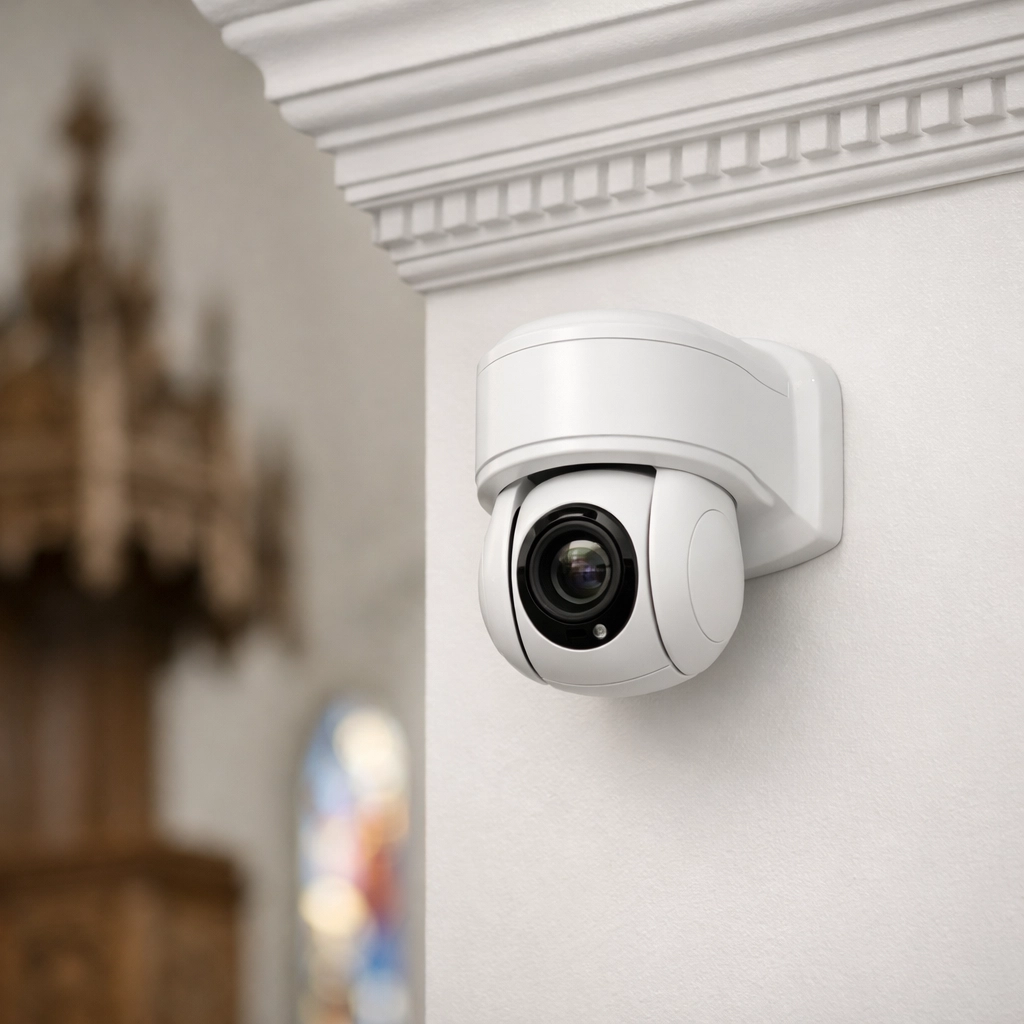
Choose cameras that blend architecturally. Black PTZ cameras on white walls scream "we installed technology here!" Instead, match camera housings to your wall colors. That same Presbyterian facility used white cameras that integrated so seamlessly, many congregants didn't notice them for months.
Position matters too. Can you mount cameras in existing architectural features, balconies, alcoves, or upper galleries, rather than bolting them prominently to walls?
For Audio:
Here's a secret: your existing speaker system might be fine. The problem is usually the mixing and control infrastructure, not the speakers themselves.
Before replacing every component, audit what you actually have. Can you upgrade to a modern digital console with Dante networking while keeping your current speakers? This approach saved one facility tens of thousands of dollars and avoided drilling new mounting points into historic walls.
For Lighting:
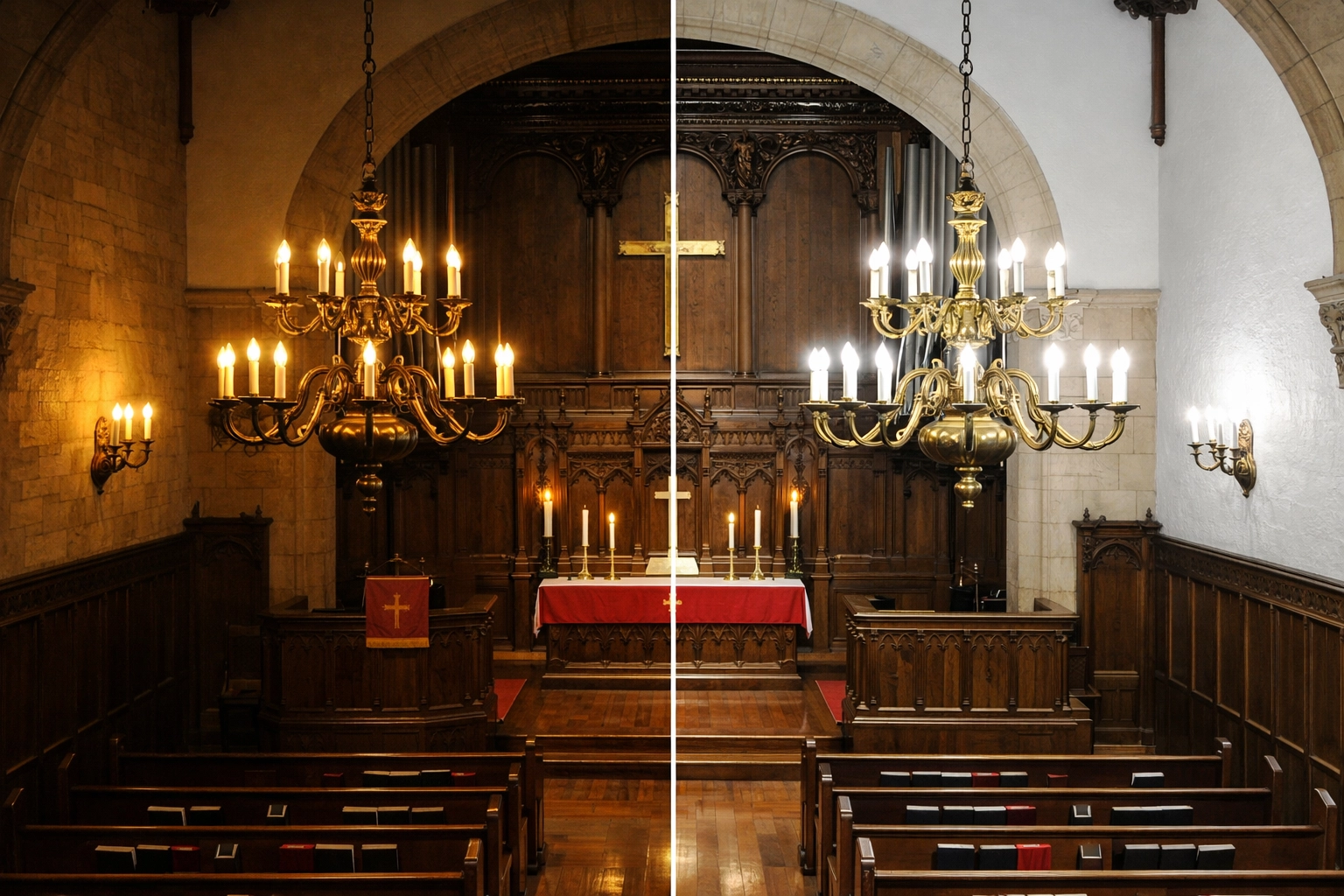
Traditional fixtures, chandeliers, sconces, wall-mounted lights, can be retrofitted with LED solutions and modern dimming controls. You keep the physical fixture that matches your architecture, but gain contemporary control and efficiency.
This beats ripping out period-appropriate lighting to install modern fixtures that clash with your aesthetic.
3. Implement in Phases Aligned With Reality
Let's talk budget. A complete AV overhaul for a traditional sanctuary can easily run six figures. For most congregations, that's not happening in a single year.
The phased approach works better anyway because it:
Spreads costs across multiple budget cycles
Allows your team to learn each system before adding complexity
Minimizes disruption to regular services
Lets you adjust the plan based on real-world experience
One effective sequence:
Year 1: Video upgrade
Projectors or displays
Screens
Basic camera system
Video switching
Year 2: Audio enhancement
Digital mixing console
Upgraded microphones
Network audio infrastructure
Recording capability
Year 3: Lighting controls
LED retrofits for existing fixtures
Modern dimming and control
Preset scenes
This gives you functional improvements each year without overwhelming your operations team or budget committee.
Coordinate installation timing carefully. Most successful projects schedule work in one-week windows, aggressive enough to make progress, short enough to avoid disrupting multiple services.
4. Integrate Everything for Seamless Control
Here's where modern AV earns its keep: integration.
In traditional setups, audio lives on one system, video on another, lighting on a third. Your volunteer tech team needs to learn three different interfaces and remember which button does what on which panel.
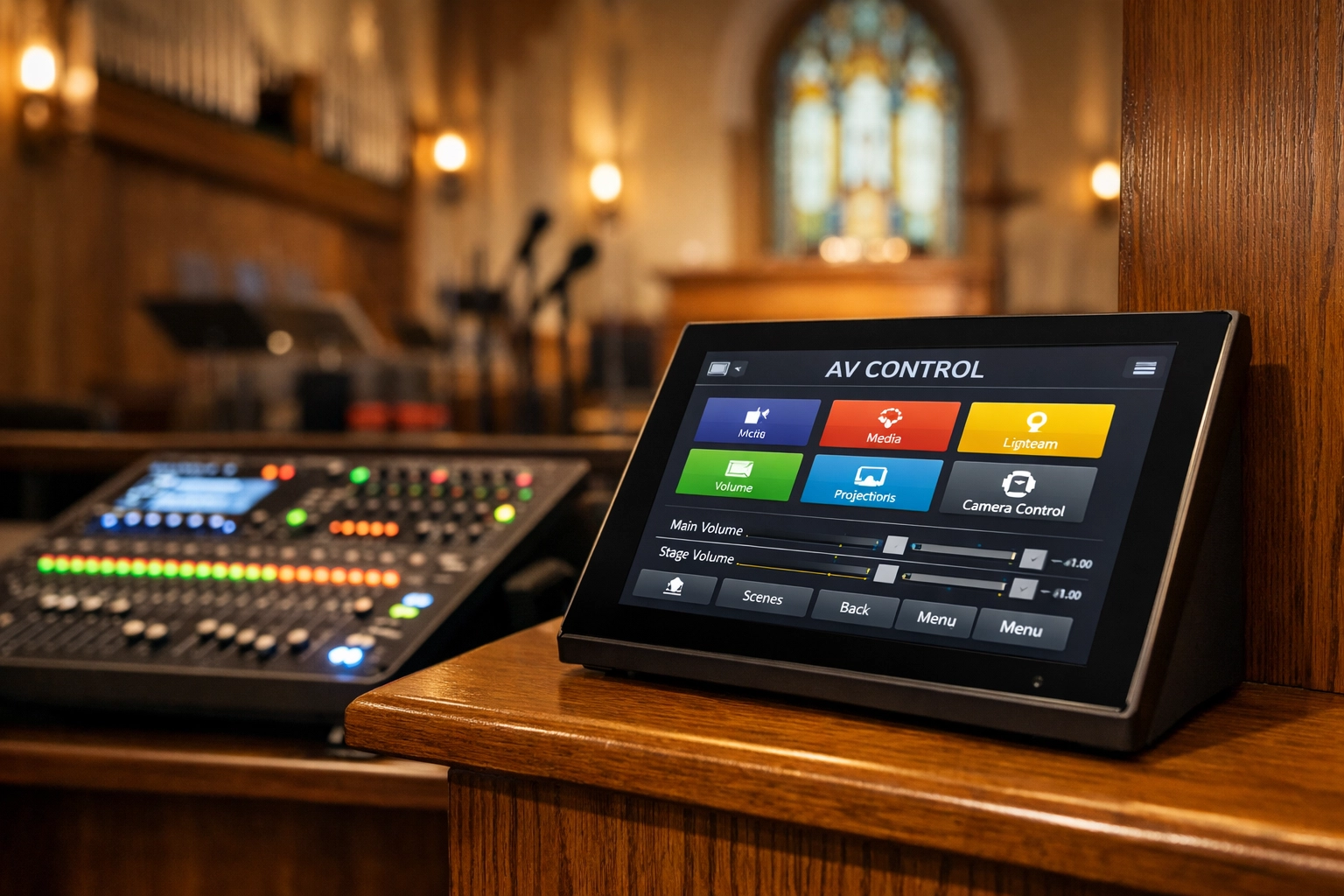
Modern integration brings audio, video, and lighting into unified control platforms with touchscreen interfaces that actually make sense. "Sunday Morning Service" becomes a single button press that:
Powers up projectors
Raises screens
Sets lighting levels
Routes appropriate audio inputs
Positions cameras
Your staff can operate everything independently without calling the integrator every week. That's the goal.
What Success Actually Looks Like
Successful integration of old architecture and modern AV has specific markers:
Visual harmony: Technology doesn't dominate the space. Equipment blends, hides, or integrates architecturally. When members comment on improved quality rather than noticing new equipment, you've succeeded.
Operational simplicity: Your team runs services confidently without technical degrees. If only one person can operate your system, it's too complicated.
Maintained tradition: The architectural elements that define your sanctuary remain intact and honored. Technology serves the space, not the other way around.
Functional excellence: Clear sound everywhere. Visible content from every seat. Reliable streaming. Consistent lighting. The technology does its job without drawing attention to itself.
Getting Started: Your Next Steps
If you're staring at your traditional sanctuary wondering how to make this work, here's your practical starting point:
Document what matters most. Walk your space with leadership and identify which architectural elements are non-negotiable. Take photos. Be specific.
Audit your current systems. What actually works? What fails? Which problems need immediate solutions versus nice-to-have upgrades?
Consult with specialists who understand both worlds. You need integrators who've worked in traditional spaces and understand preservation alongside technical capability. Ask to see photos of previous installations in similar environments.
Plan for phases, not perfection. What's the minimum viable upgrade that solves your most pressing problem? Start there.
Budget for professional design. The planning phase investment pays for itself by avoiding expensive mistakes and equipment that doesn't fit your space.
The bottom line? Old sanctuary architecture and modern AV aren't enemies. They're partners: when you approach integration with the right framework. Your traditional space can absolutely serve contemporary needs without sacrificing the character that makes it meaningful.
You just need a plan that respects both.
Comments